

Market Review of Metals: Current Trends and Forecasts
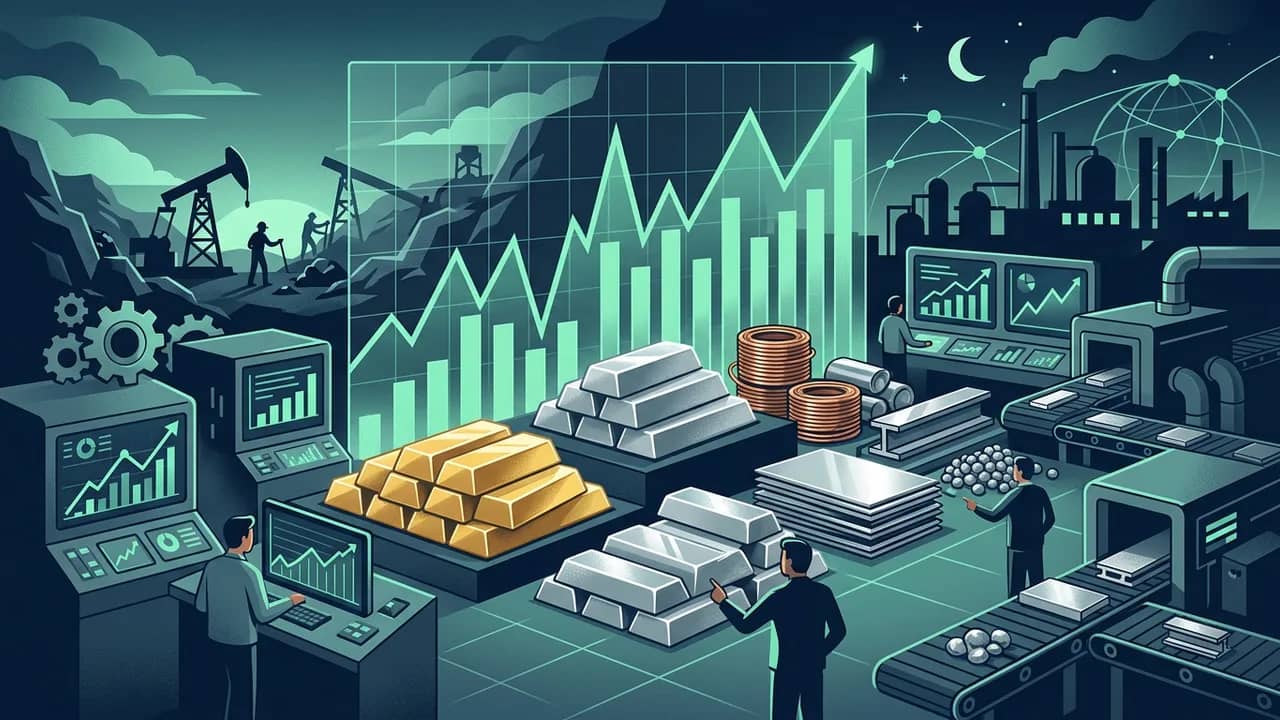
The metal market is experiencing significant price fluctuations due to economic instability and changes in demand from key industries. Precious metals are supported by inflation expectations, while industrial metals depend on the state of the global economy and infrastructure programs.
The metal market continues to demonstrate dynamic development, influenced by global economic factors, geopolitical tensions, and changes in demand from key industries. In recent months, significant price fluctuations have been observed for various types of metals, generating increased interest among investors and analysts.
Precious Metals: Refuge or Speculative Asset?
Gold and silver are traditionally considered defensive assets during periods of economic instability. However, the current situation shows that their dynamics may be driven not only by investors' desire to preserve capital, but also by speculative sentiment. Rising inflation expectations and a weakening US dollar support prices for precious metals. At the same time, tightening monetary policy by central banks may put pressure on their prices.
Industrial Metals: Demand from Key Industries
Copper, aluminum, nickel, and other industrial metals are a barometer of the global economy's state. Demand for them is closely tied to activity in construction, automotive, electronics production, and renewable energy development. A slowdown in the growth of the global economy, particularly in China, may negatively impact prices of industrial metals. On the other hand, government programs to stimulate infrastructure projects and the transition to a 'green' economy create long-term prospects for growth in demand.
Copper: Indicator of Economic Health
Copper, often called 'Dr. Copper' for its ability to predict economic trends, is showing volatility. Increased demand from electric vehicles and renewable energy infrastructure is supporting its value, but concerns about a global recession are capping further gains.
Aluminum: Challenges and Opportunities
The aluminum market faces challenges related to high energy costs for production and a potential oversupply. However, its use in lightweight construction for the automotive and aerospace industries, as well as in packaging, ensures stable demand.
Forecasts and Outlook
In the short term, the metals market will remain influenced by macroeconomic factors such as inflation, interest rates, and GDP growth rates of leading economies. Long-term prospects are linked to the global energy transition, the development of new technologies, and urbanization, which will stimulate demand for various types of metals. Investors are advised to closely monitor changes in the global economy and geopolitical situation to make informed decisions.
AI Analysis Disclaimer
Asset impact analysis is generated by AI and is intended for informational purposes only. It does not constitute financial advice. Always do your own research before making investment decisions.

Discussion